Storms Are Scary For Baby Sharks
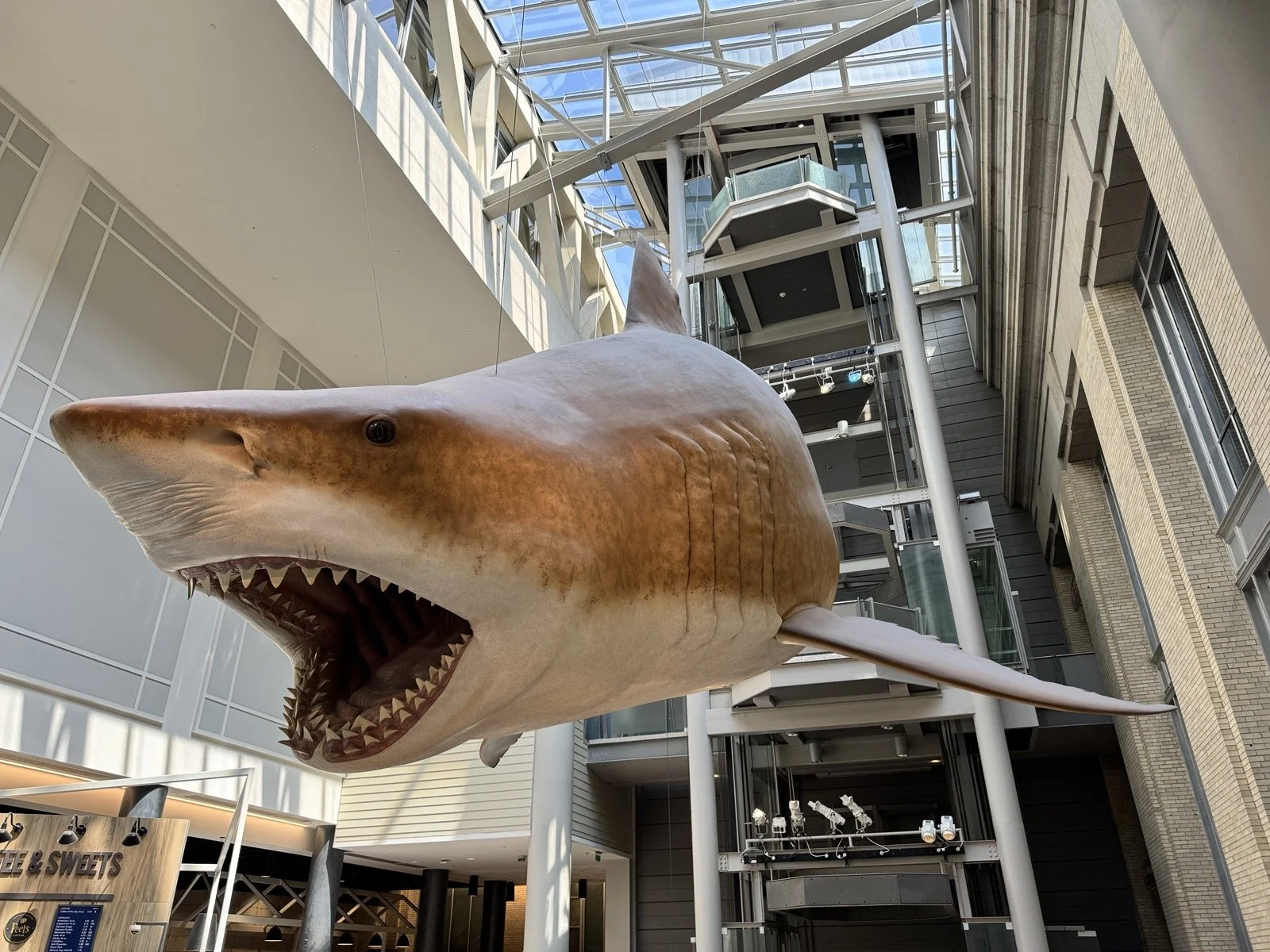
A mako-like restoration of Otodus megalodon, the largest predatory shark of all time. Credit: Riley Black
This post originally appeared in Riley’s newsletter The Boneyard. To support independent science writing and get stories like this direct to your inbox, subscribe on Buttondown.
I hesitate to call the sharks “little.” They certainly were not. Based upon the measurements of their teeth, paleontologist Catalina Pimiento and colleagues estimated that most of the Otodus megalodon in the Panama fossil site were six feet long or longer, the smallest being about my size. But compared to the adult sharks, fifty feet or more from nose to tail tip, the chompers were clearly young ones that lived along the edge of the ancient Caribbean Sea.
The sharks must have known storms. Hurricanes and heavy thunderstorms that diluted the salt of the ocean water and made waves rise. Young megalodon, snapping up fish and sea turtles in the shallows, must have been occasionally buffeted by angry waves in waters turned gray by heavy clouds. How did they cope?
Baby white sharks might give us a clue. In 2023, Tropical Storm Hilary swept up from Baja toward San Diego, dropping more than five inches of rain among wind gusts that roared at more than 80 miles per hour. The storm’s late summer arrival meant that it passed over the nearshore nursery areas where the year’s young great whites hang out before becoming one-ton seal eaters.
The baby sharks did not stay for the stormy waters. The young ones, big eyes and sharp teeth, fled the area, reported earlier this year by marine scientist Jack Elstner and colleagues.
Experts already knew that animals living along coasts try to get out of the way of harsh storm conditions, but no one knew whether great white sharks follow the same pattern. Or why they might flee. Is it dropping barometric pressure, or temperature changes, or shifts in salinity, or something we haven’t thought of because we don’t share all the same senses? Elstner and coauthors were already tracking young great white sharks off San Diego through acoustic telemetry, receivers scattered in key locations tracking the movements of the sharks. It was clear that the sharks emptied out of their nursery areas to get away from the storm waters, but, Elstner and colleagues wondered, what gave the fish the prompt to exit?
The oceanographers looked to various other monitoring stations in the area to track wave height, suspended particles in the water, wave height, and other factors that the storm altered. By analyzing this data, along with the movement of 22 young sharks tagged off San Diego, the researchers could piece together what the fish must have experienced.
As Tropical Storm Hilary approached, the researchers found, sea temperatures quickly plummeted. The sharks emptied out of the nursery. The acoustic receivers picked up the least number of responses during the time when temperatures were reaching their lowest points. Wind-whipped waves, falling pressure, and dropping saltiness also seemed to push the sharks away, but not as significantly as temperature. The trend seems to make sense given which specific sharks fled at what point. The youngest, smallest sharks - the most affected by temperature changes due to lower volume compared to their surface area - sped out of the nursery, while older sharks between three and four years old held a little tighter to the study area during the storm conditions.
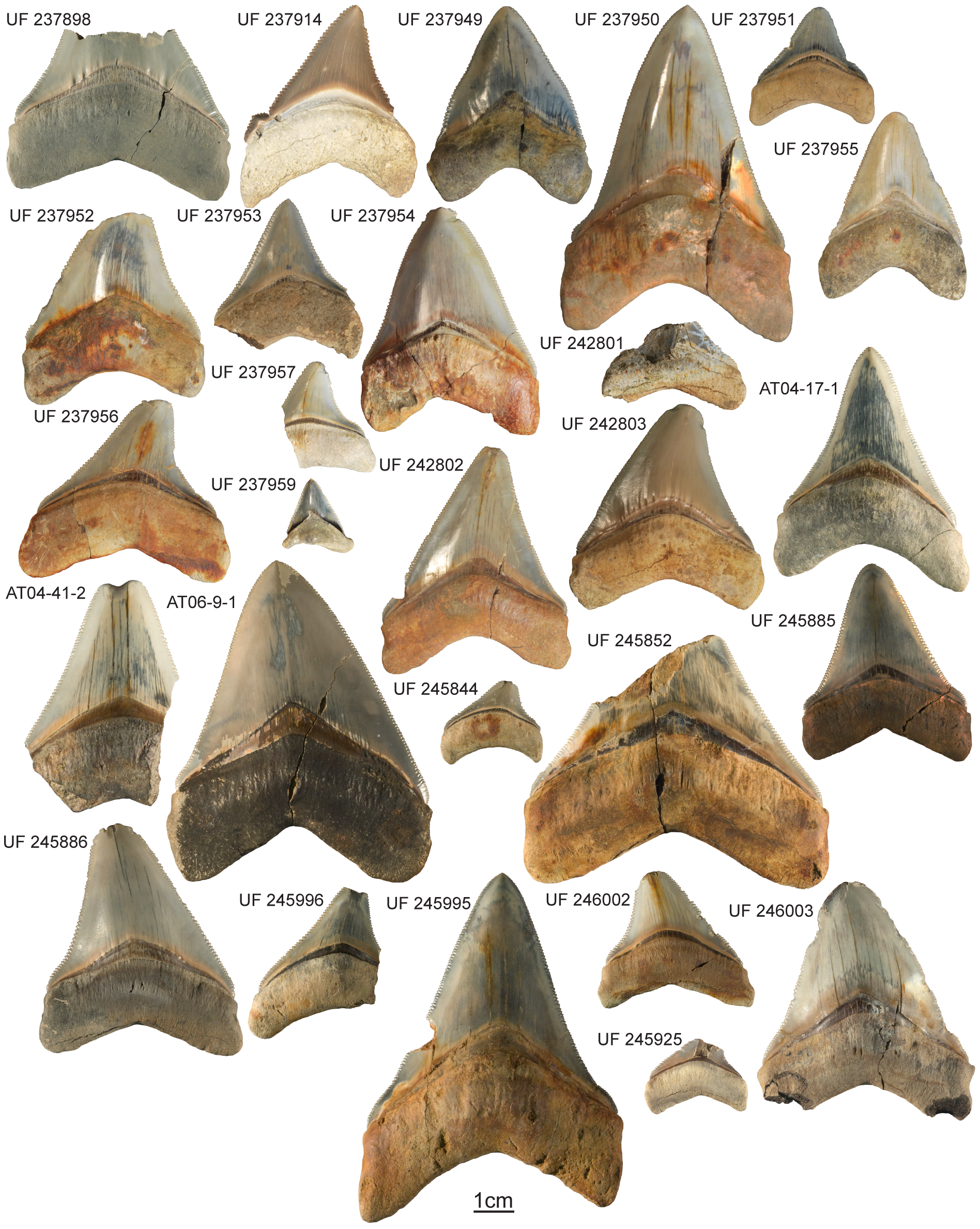
The teeth of O. megalodon from the Gatún Formation, including many babies. From Pimiento et al. 2010.
The researchers were unable to tell where all the sharks went. Some scattered beyond detection range, perhaps to deeper waters further from shore. But some of the young ones took shelter in La Jolla Cove, a sheltered area right next to a marine canyon more than 600 feet deep. One study shark was detected in the canyon more than 400 feet below the surface, perhaps to escape the rougher conditions above.
When the move away from such storms, baby great whites aren’t just responding to the storm. They’re learning. Elstner and colleagues point out that nursery time for baby sharks not only offers them shelter and abundant food during a critical growth phase, but they also gain time to learn when storms or other adverse conditions are setting in. Knowing when a storm’s coming can be essential for their long-term survival if they’re going to keep hunting seals on stormy coasts. This may also be why some of the older, three- and four-year-old sharks stuck closer to the nursery - they’d lived through storms and were not as frazzled by the temperature drops and rough water.
Once the worst was over, the baby sharks returned. The nursery isn’t just any old place. The sharks know its contours and the feel of the habitat, drawn back as soon as the storm headed off further inland. I wonder what it must have been like, whether young sharks felt some sense of relief or comfort to return to their home habitat when the waters calm. And I wonder if baby megalodon might have felt the same over 8 million years ago.
It’s a mistake to assume that baby megalodon were just the same as young great white sharks. We still don’t even know what the body shape of megalodon truly looked like, whether it was chubbier, sleeker, more elongated, or what. But we do know, thanks to Pimiento and colleagues, that the sharks used nurseries as many shark species do, and their youngesters would have contended with extreme weather just like modern sharks. I wonder where they went, what drew them back, and if this flexibility is what led the biggest macropredatory shark of all time to thrive so so many millions of years.