Giant Dinosaurs Nested Near the Antarctic Circle
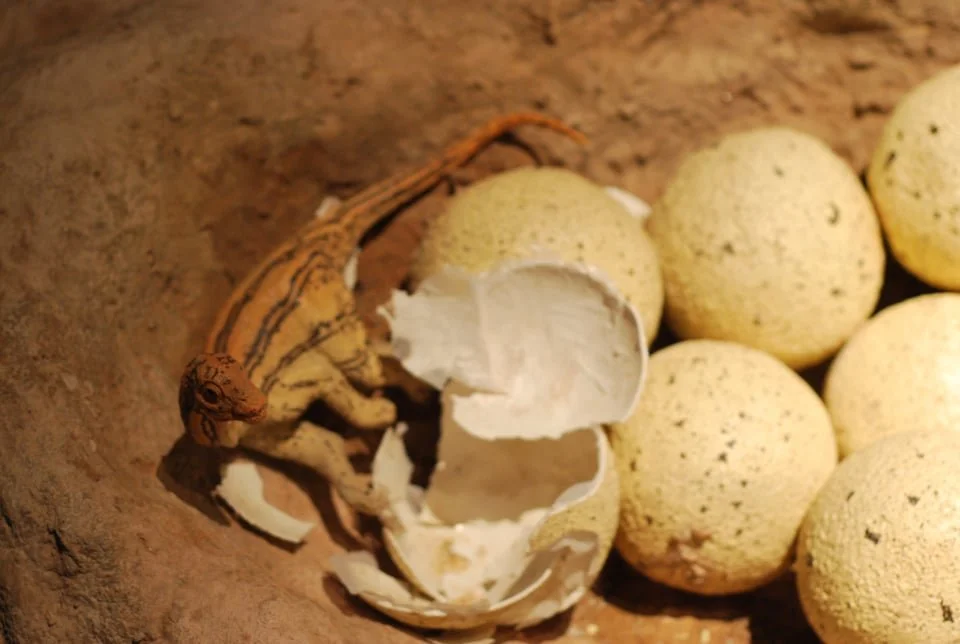
Titanosaur nests were mostly likely covered with rotting vegetation, despite this very cute model, to help keep the developing babies warm. Credit: Riley Black
Bestselling and Award-Winning Writing
Welcome! Here you'll find details about Riley Black’s books, her latest articles, and where to see her enthusing about paleontology. Dig in!
Titanosaur nests were mostly likely covered with rotting vegetation, despite this very cute model, to help keep the developing babies warm. Credit: Riley Black
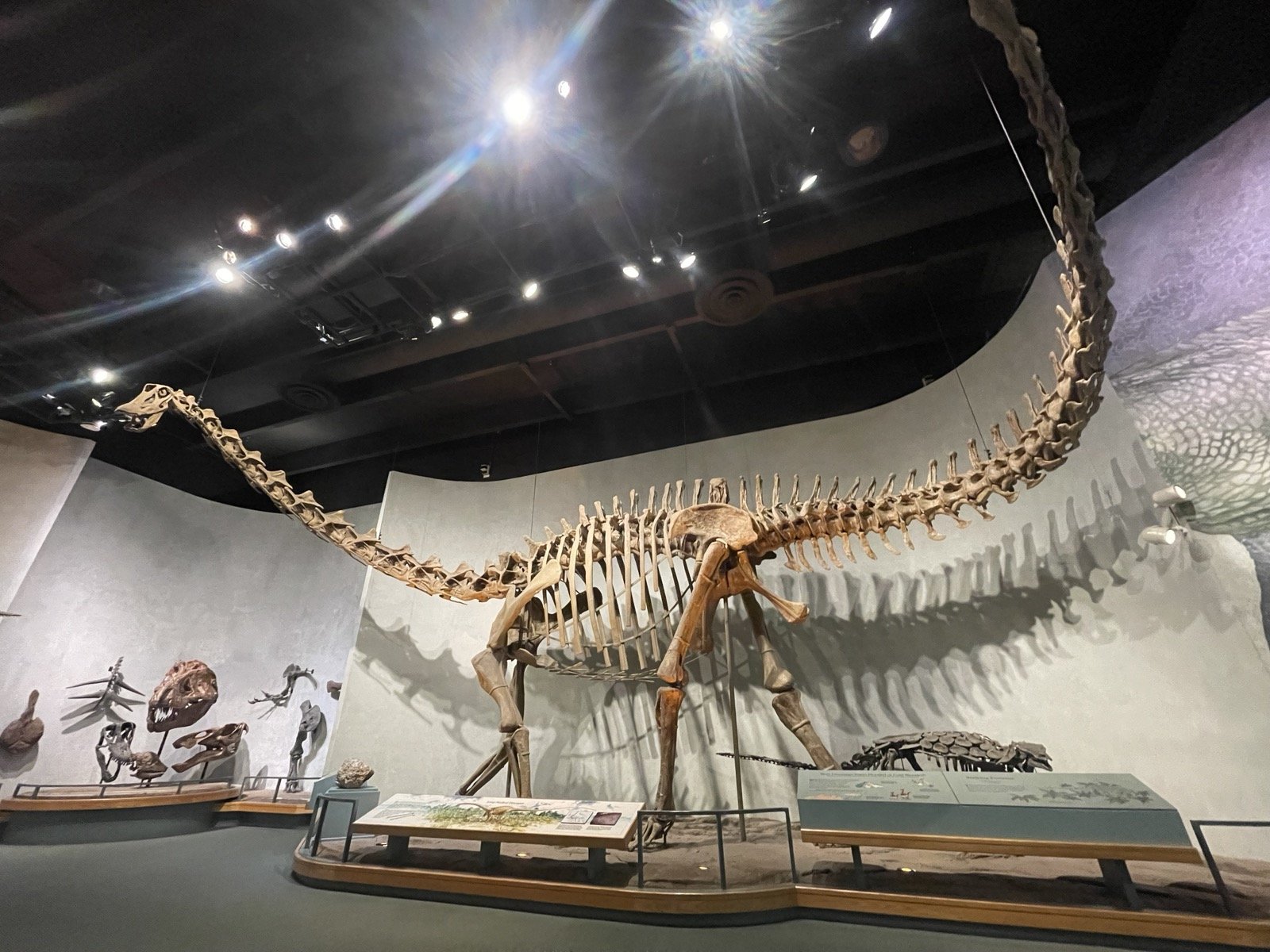
Diplodocus is an iconic North American dinosaur, now found in Spain, too. Credit: Riley Black
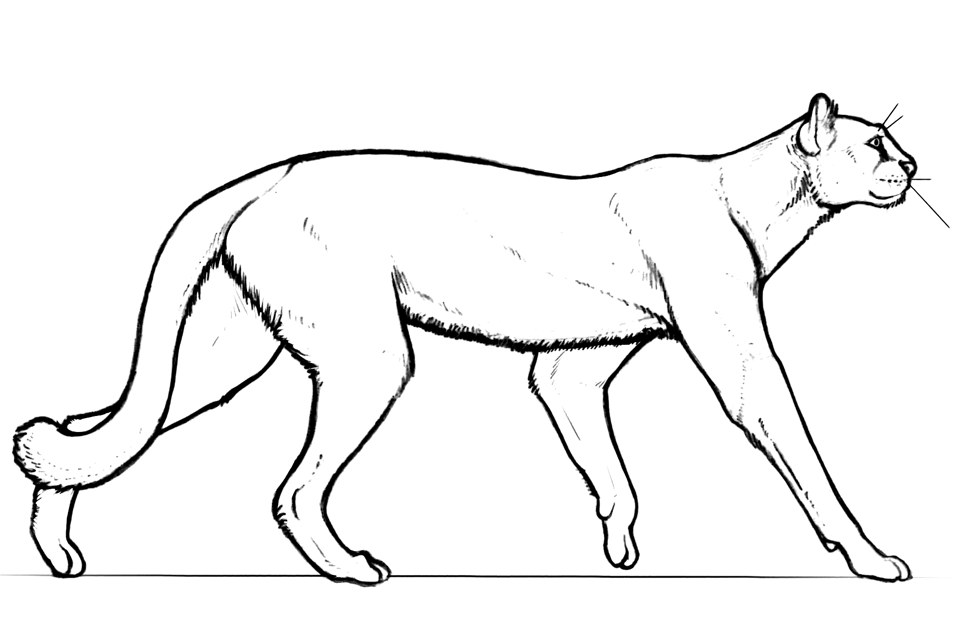
Miracinonyx was a lanky mountain lion, not an Ice Age cheetah. Credit: NPGallery
Cheetah-like cats in the ancient Yukon stuffed themselves on salmon, not pronghorn.
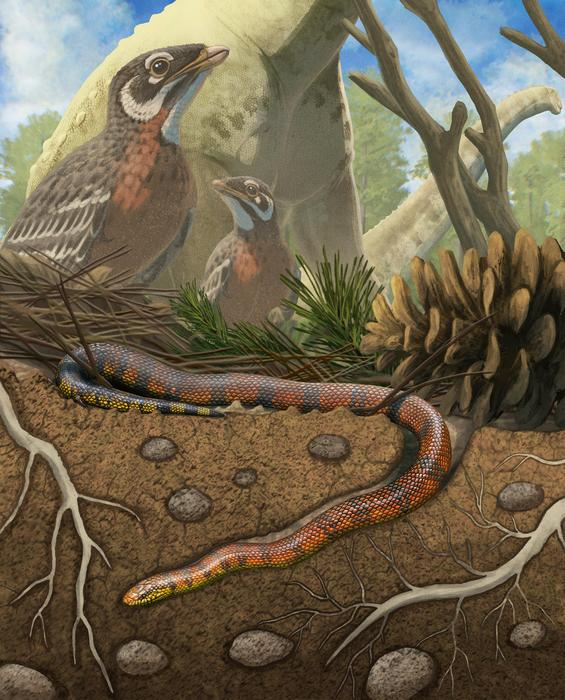
Read MoreThe ancient snake Tametara mirim burrowing below the feet of huge dinosaurs - and hungry birds. Credit: Gabriel Ugueto
An exceptional fossil snake alters expectations of serpent origins and evolution.
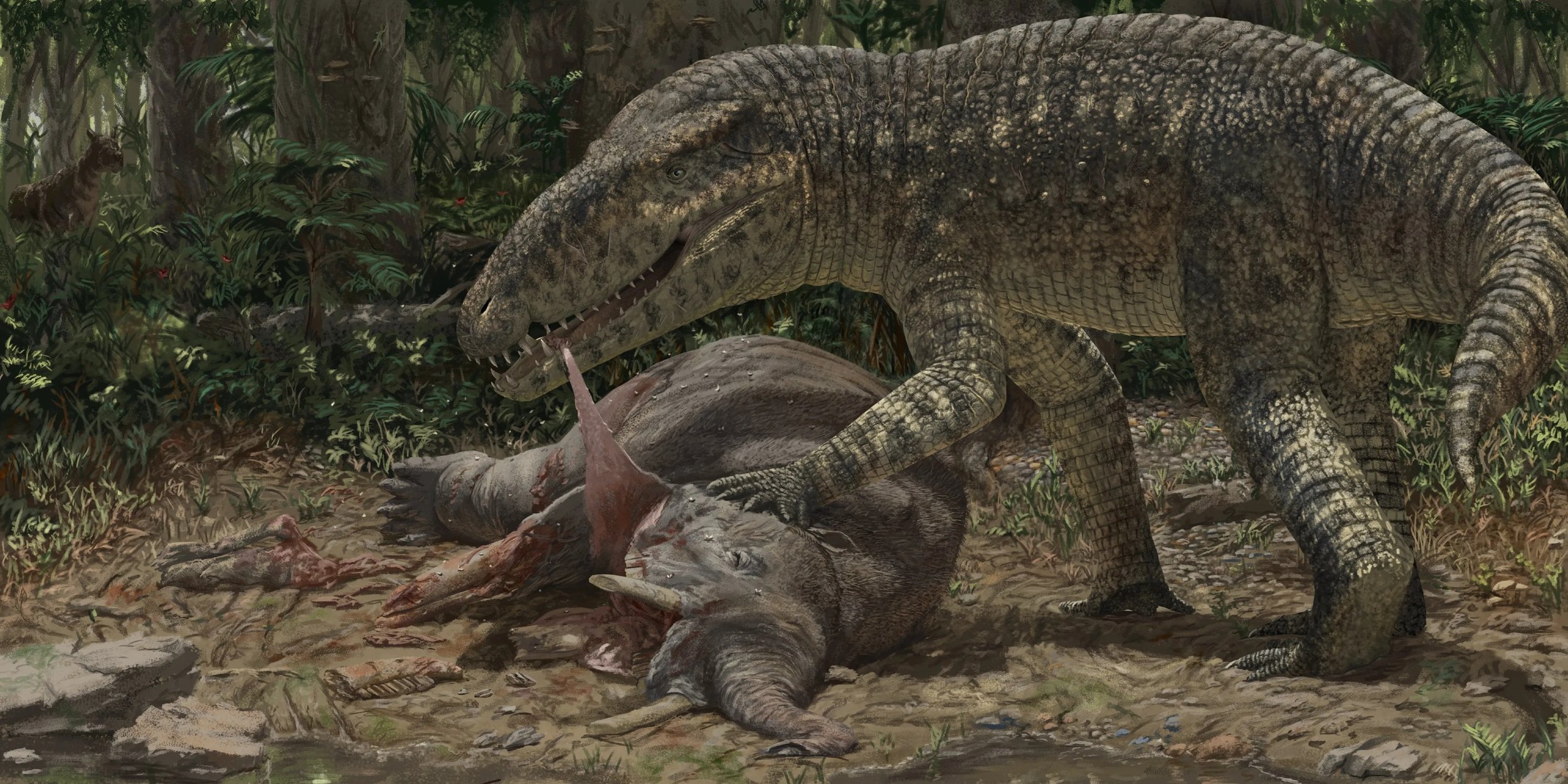
Read MoreIn a Miocene swamp, the crocodile Langstonia scavenges the elephant-like Xenastrapotherium. Credit: Miguel Hernandez
Bitten and scraped mammal bones reveal a time when crocodiles were great reptilian apex predators.
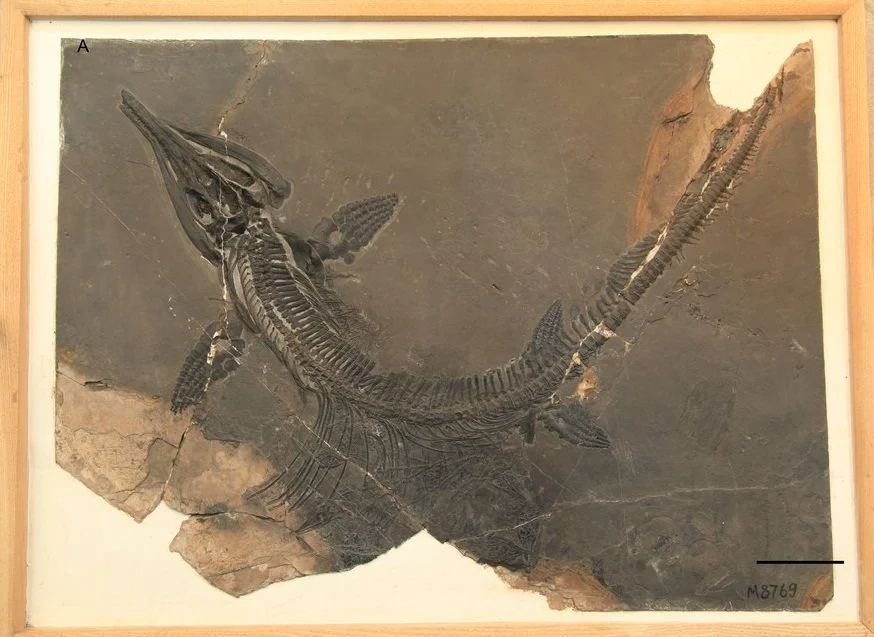
Read MoreThis gravid Mixosaurus was preserved with the bones of at least eleven babies. Credit: Gu et al. 2026
An exceptional ichthyosaur skeletons preserves a massive litter - and clues about ichthyosaur evolution.
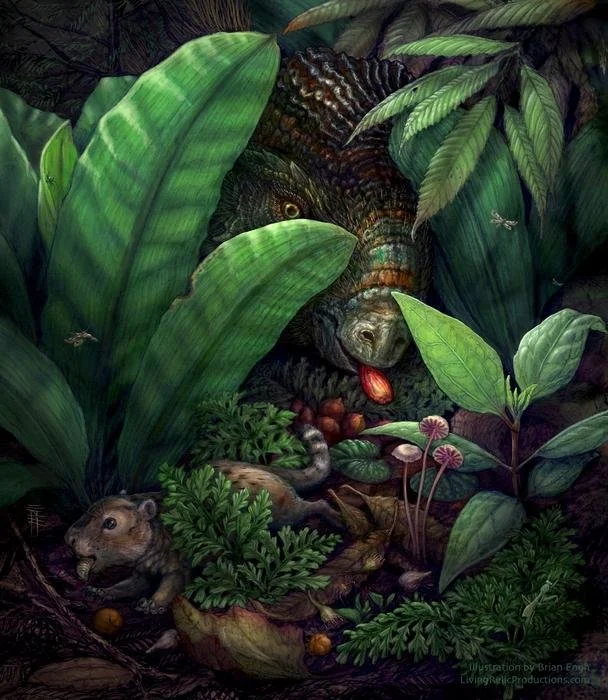
Read MoreFossils from the Cretaceous of New Mexico indicate that forests rife with flowering plants were common millions of years earlier than previously thought. Credit: Brian Engh, livingrelicproductions.com
A wealth of fossil seeds reveal a burst of flowering plant evolution before the big asteroid strike that ended the Age of Dinosaurs.
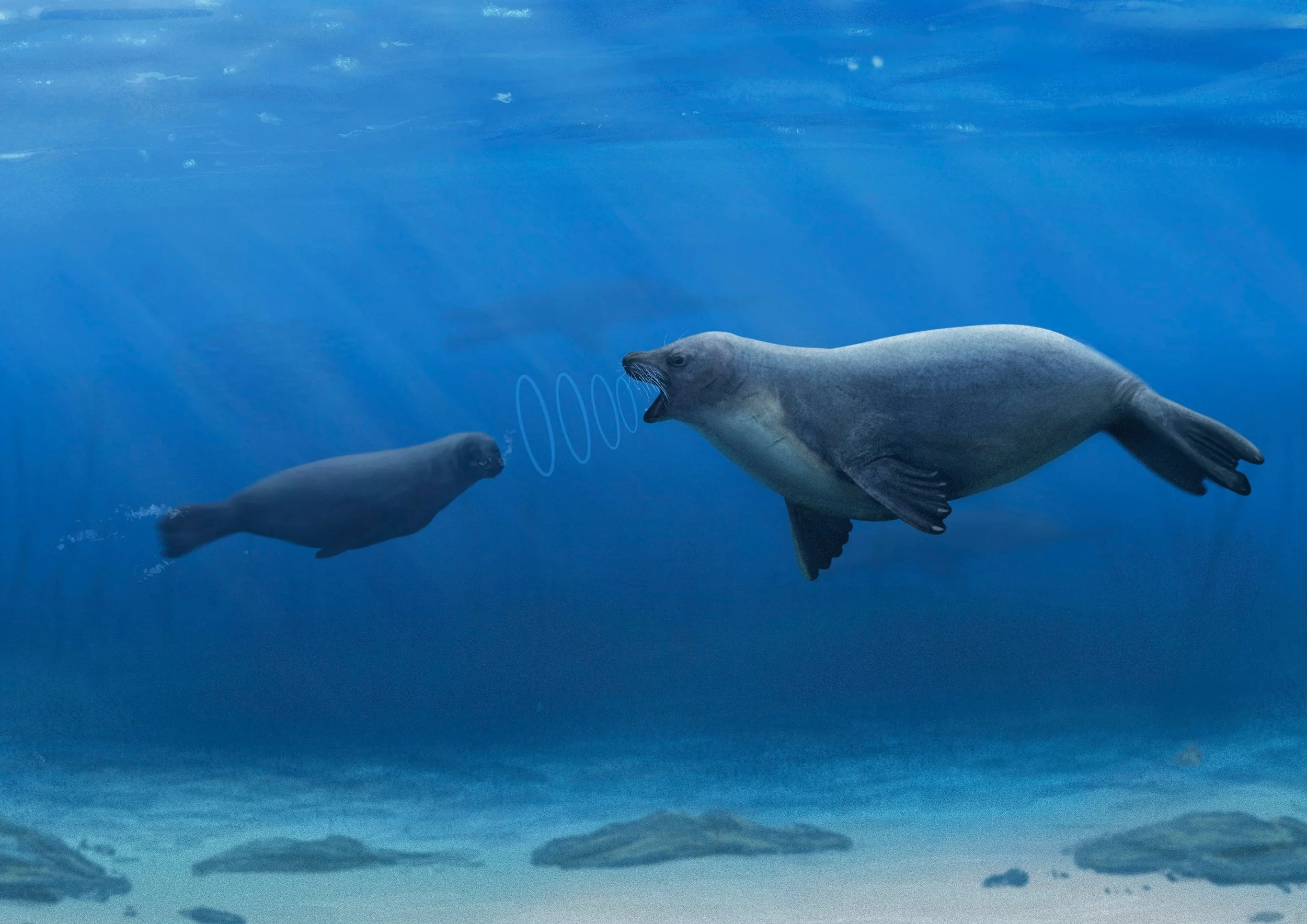
Read MorePick up, it’s Devinophoca calling. Credit: Jaime Bran
A lovestruck seal offers a lesson in how pinnipeds hear in and out of the water.
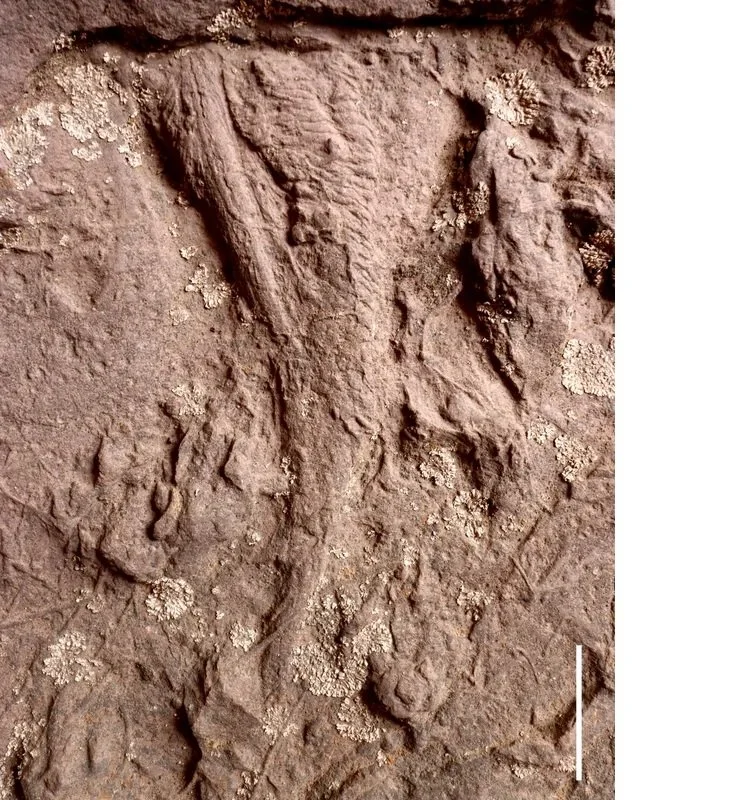
Read MoreA tail impression most likely made by a type of protomammal called a caseid. Near the top right, a V-shaped notch indicates the animal’s cloaca. Credit: Museum für Naturkunde Berlin
Why did our ancestors ever give up the cloaca?
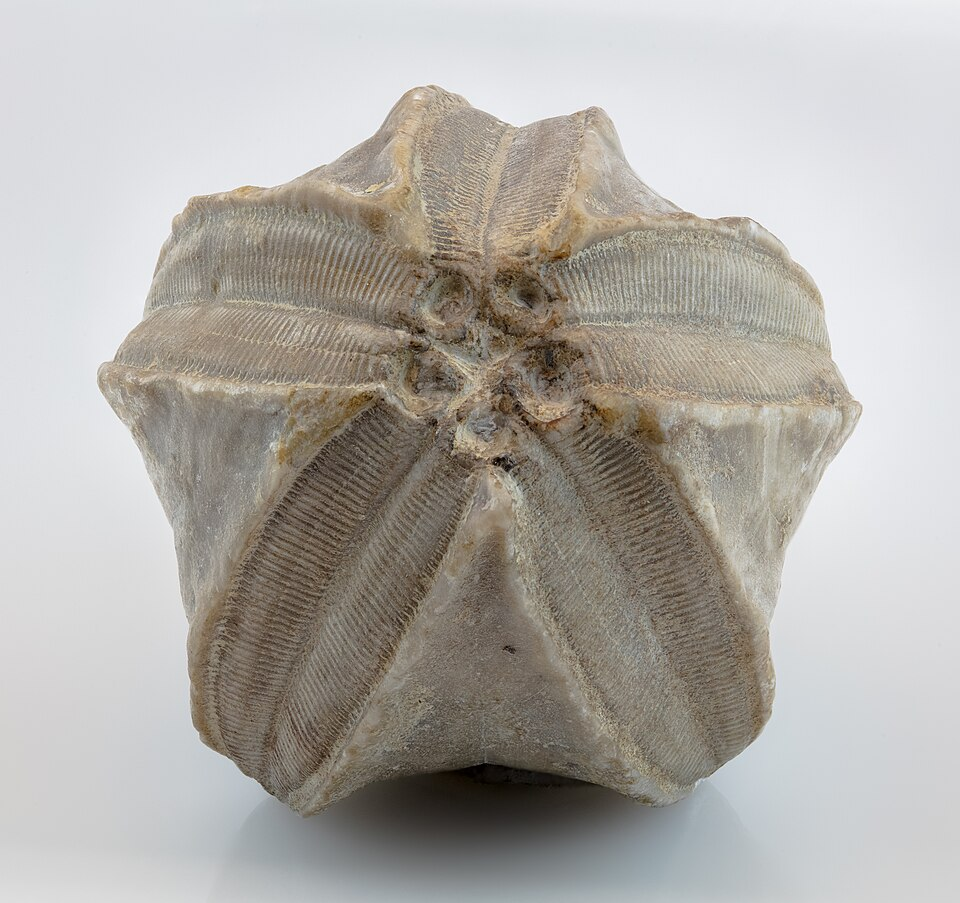
Read MoreA stacked image of the blastoid Pentremites, an extinct relative of crinoids and starfish. Credit: Diego Delso CC BY-SA 4.0
Strange bite marks on ancient relatives of sea urchins indicate some prehistoric fish were intent on making poor decisions.
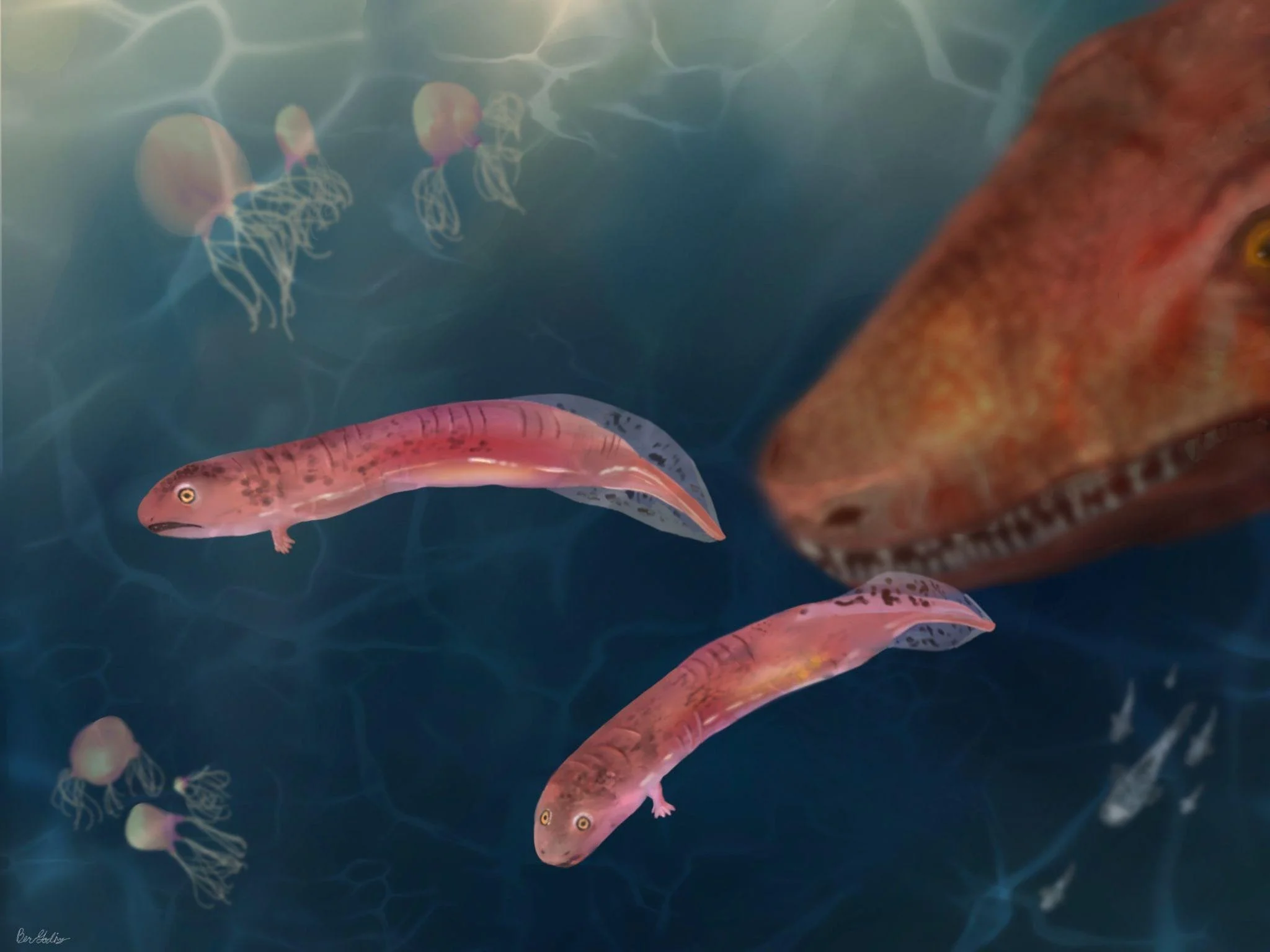
Read MoreBabies of the earliest four-legged animals did not undergo metamorphosis and were more like mini-adults. Art: Berit Goding
Ancient baby amphibians change the story of how, and why, our ancestors came out of the water.
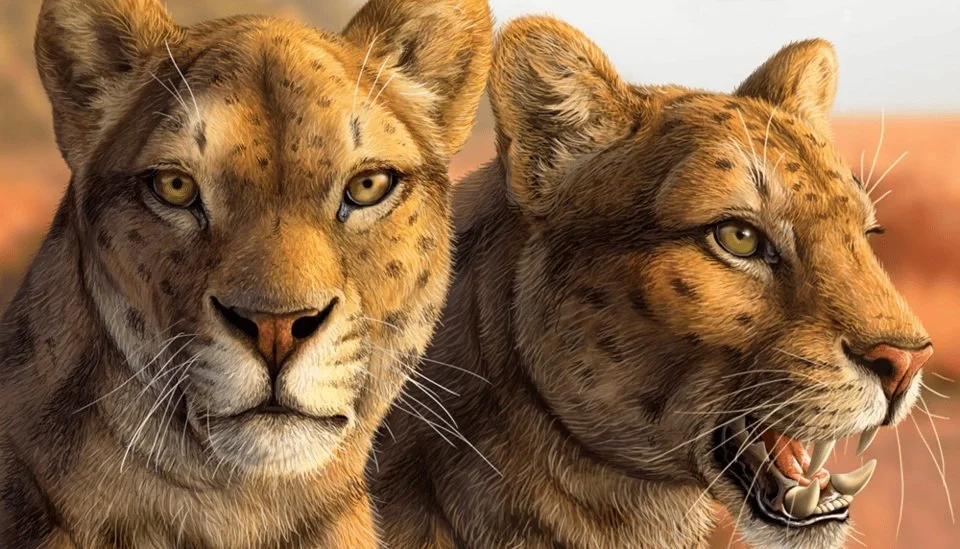
Read MoreAdelphailurus kansensis, a cougar-like sabercat. Art by Jesús Gamarra.
A misidentified fossil skull turned out to be a near-complete cranium of an early, cougar-like sabertoothed cat.
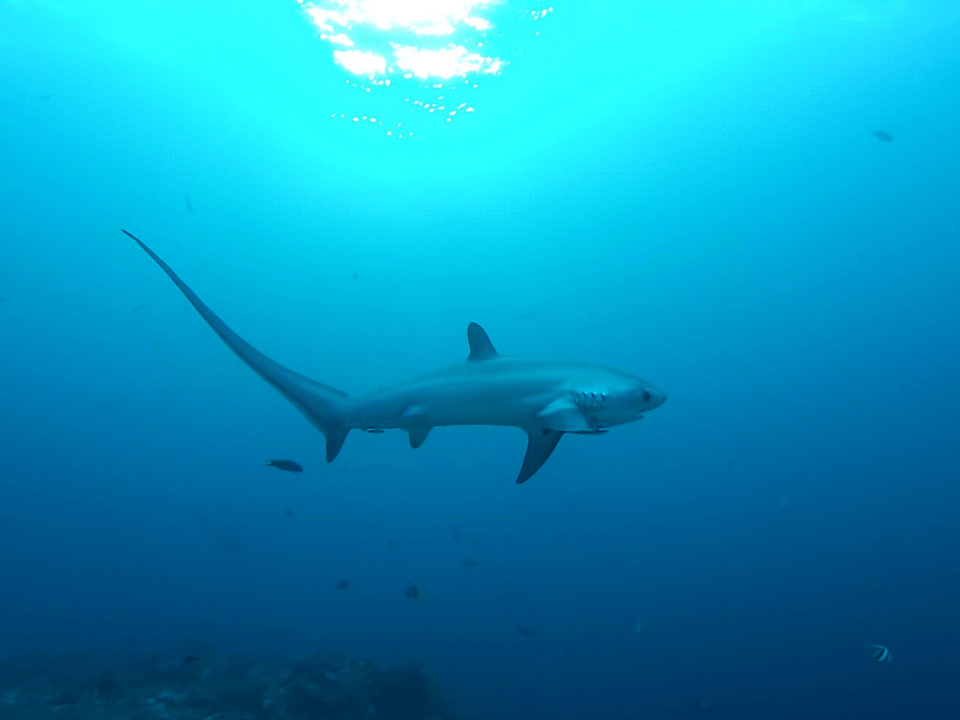
Read MoreA modern Alopias, or thresher shark. Prehistoric forms likely lacked the elongated, stunning tail. Credit: Thomas Alexander CC BY-SA 4.0
Mysterious teeth reveal an ancient thresher shark that lived, and fed, like a great white.
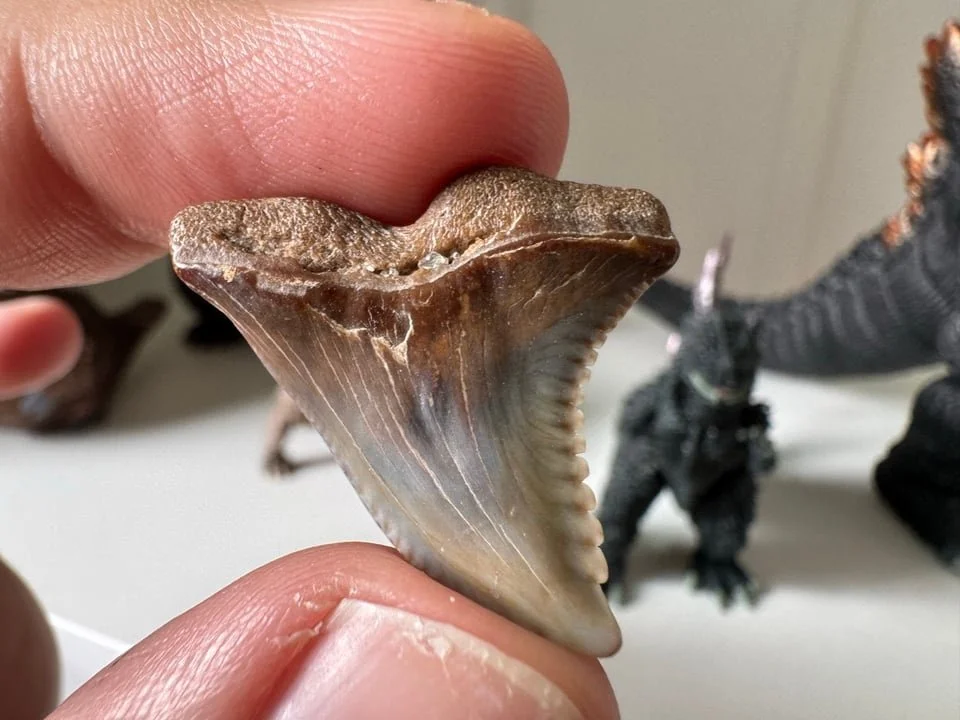
Read MoreThe snaggletooth shark that dropped this tooth more than 10 million years ago.
The single species of modern snaggletooth shark offers clues to how big sharks convergently evolved to bite big prey.
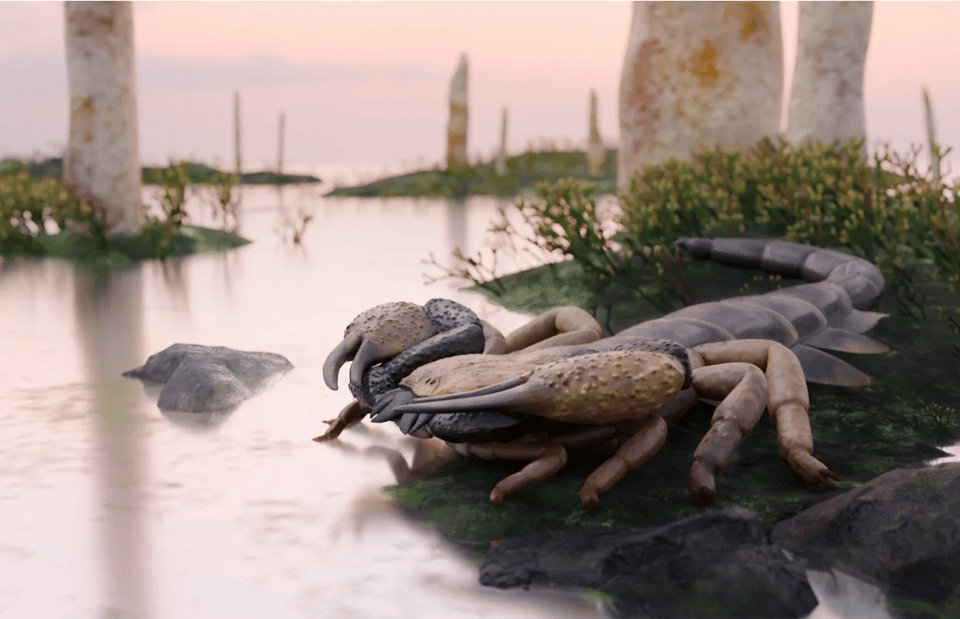
Read MorePraearcturus gigas is the largest scorpion yet known, from a time before our ancestors walked on land. Credit: Franz Anthony
The earliest terrestrial predators were immense scorpions.
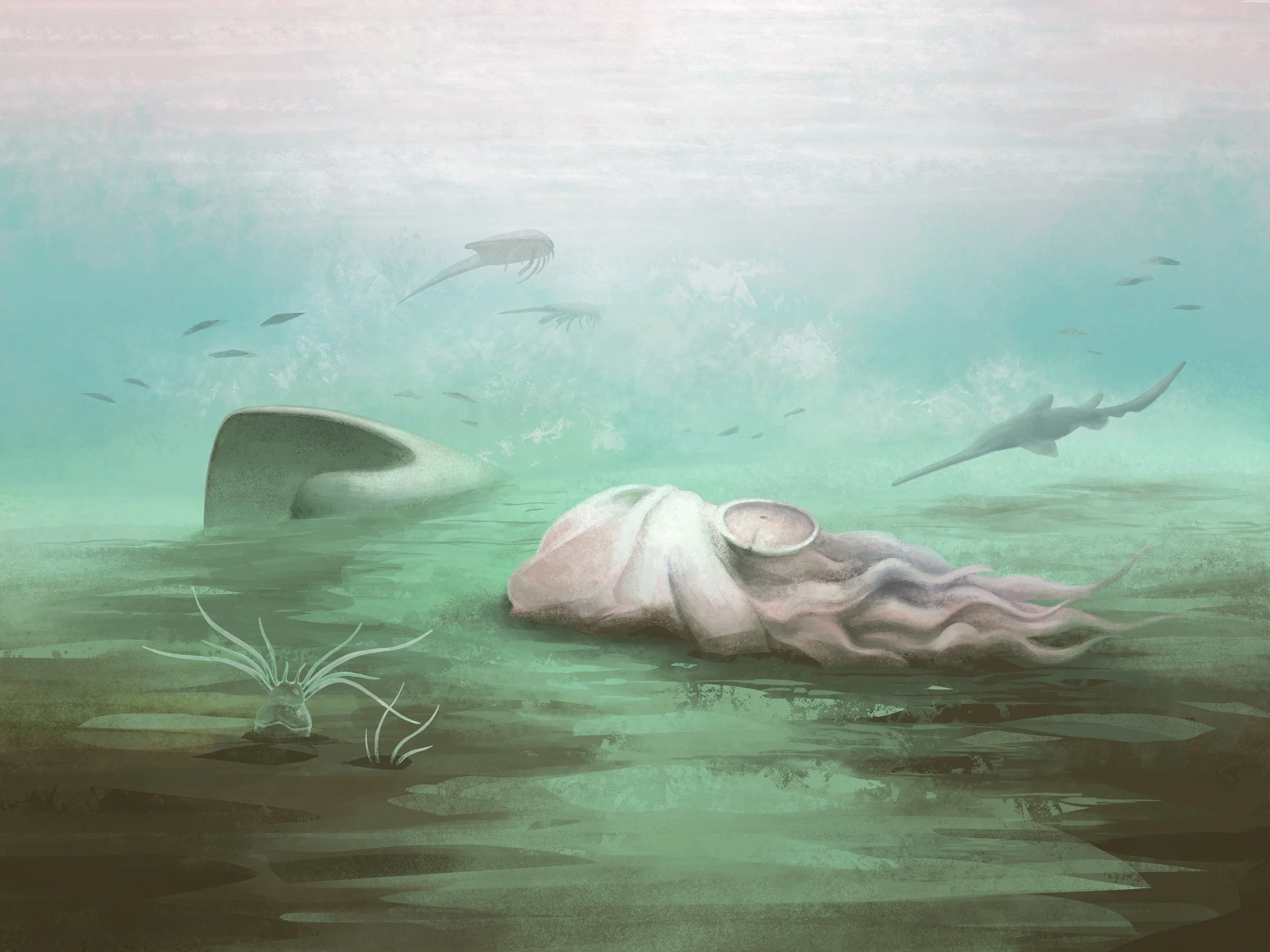
Read MoreA fossil thought to be the oldest octopus turns out to be something just as rare, even if rotten.
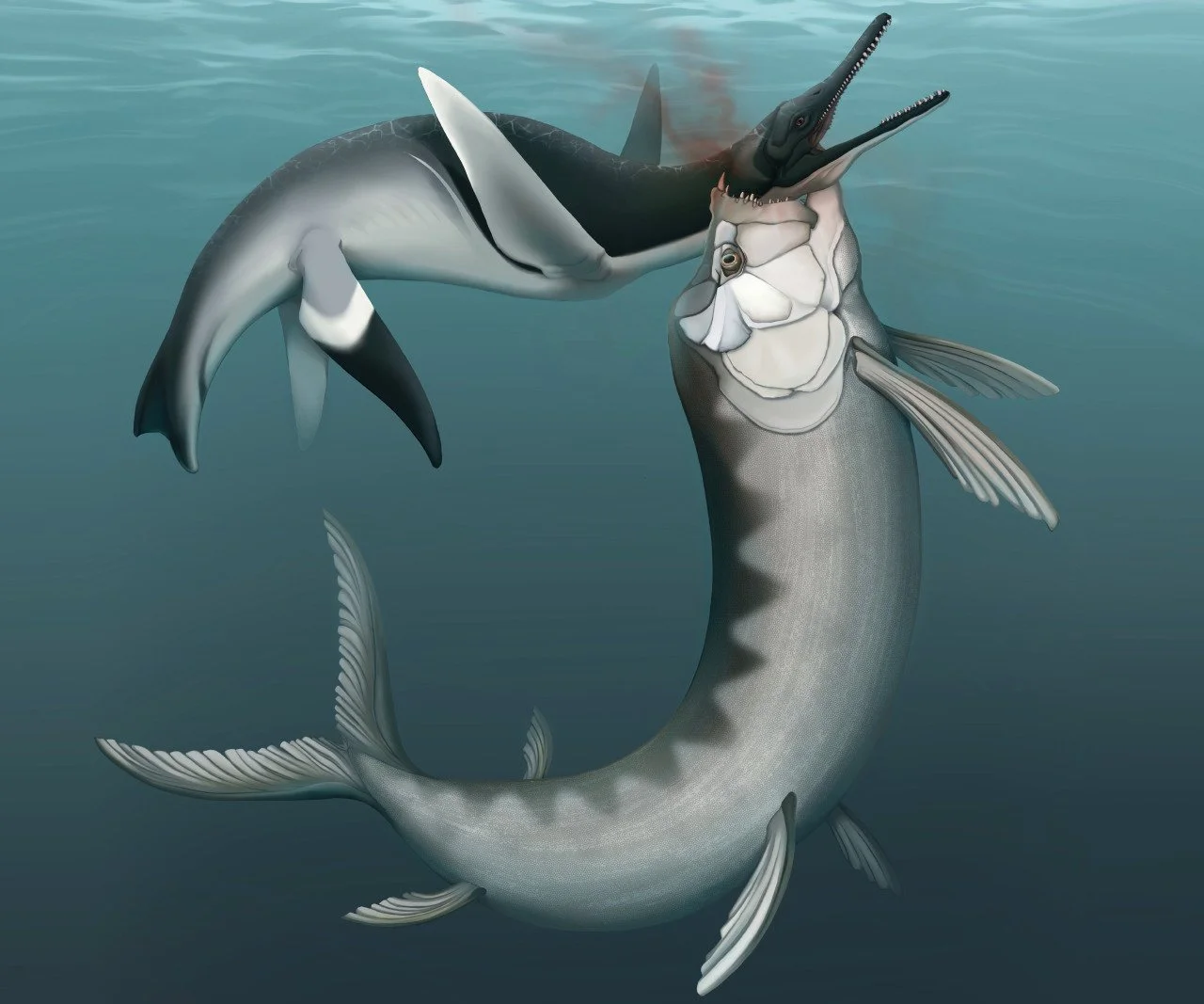
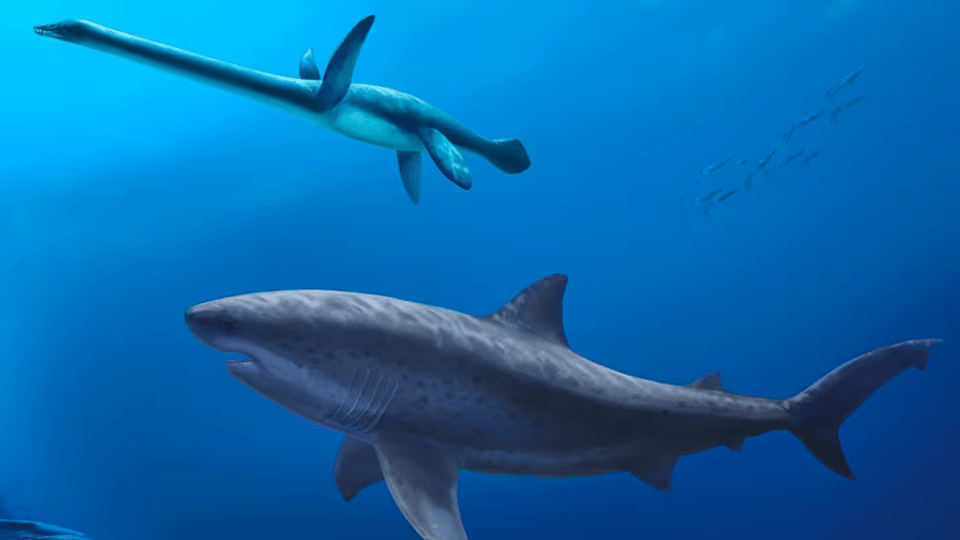
Read MoreThe attack probably occurred at the surface. Credit: Miles Mayhall
What bit a plesiosaur so hard that it left a tooth in the reptile’s neck?
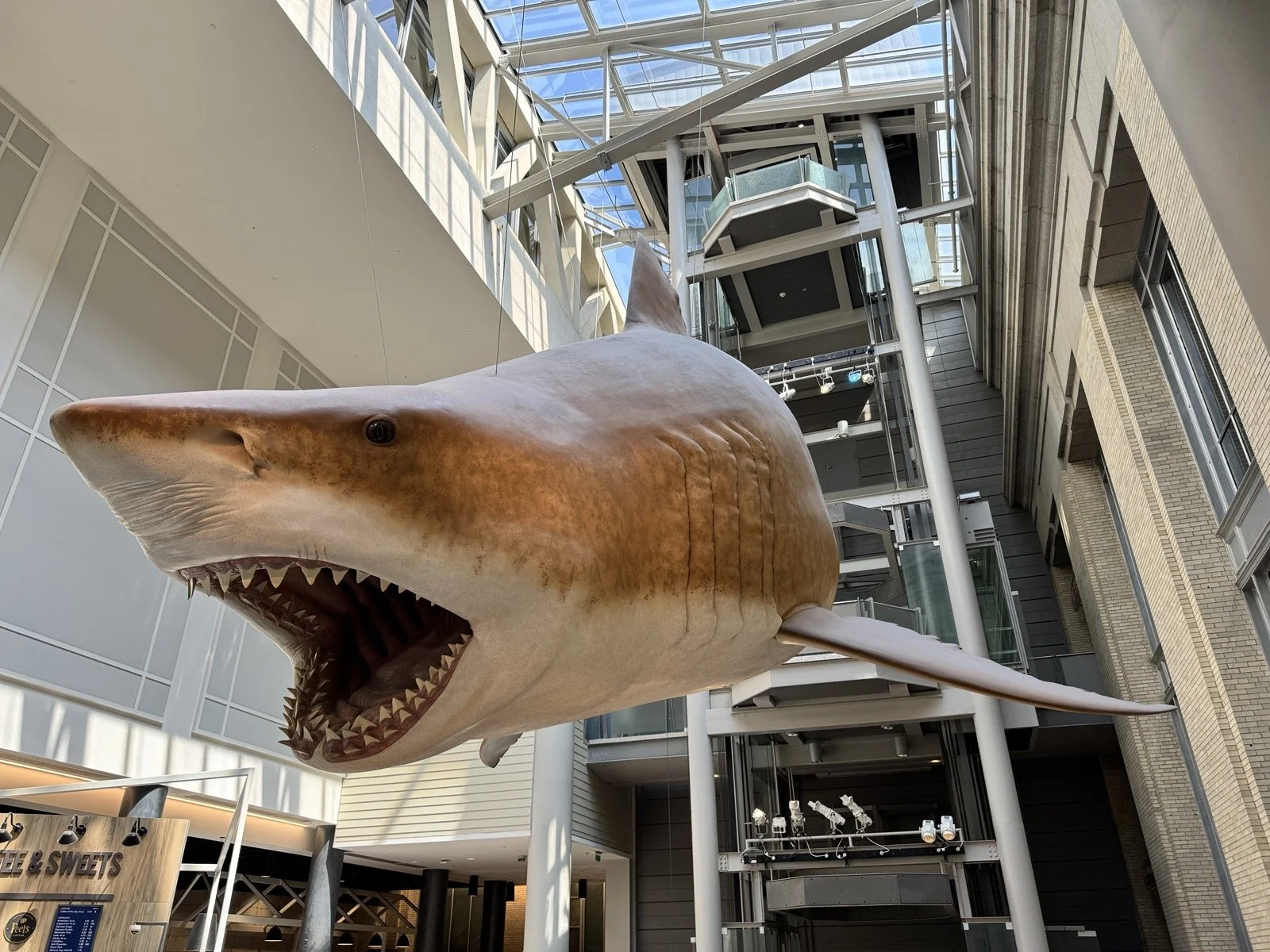
Read MoreA mako-like restoration of Otodus megalodon, the largest predatory shark of all time. Credit: Riley Black
We know megalodon babies grew up in nurseries, but what did these sharks do when storms came around? Great white youngsters might give us some clues.
Read MoreGiant predatory sharks related to today’s great whites and makos evolved during the Cretaceous. Credit: Columbus State University
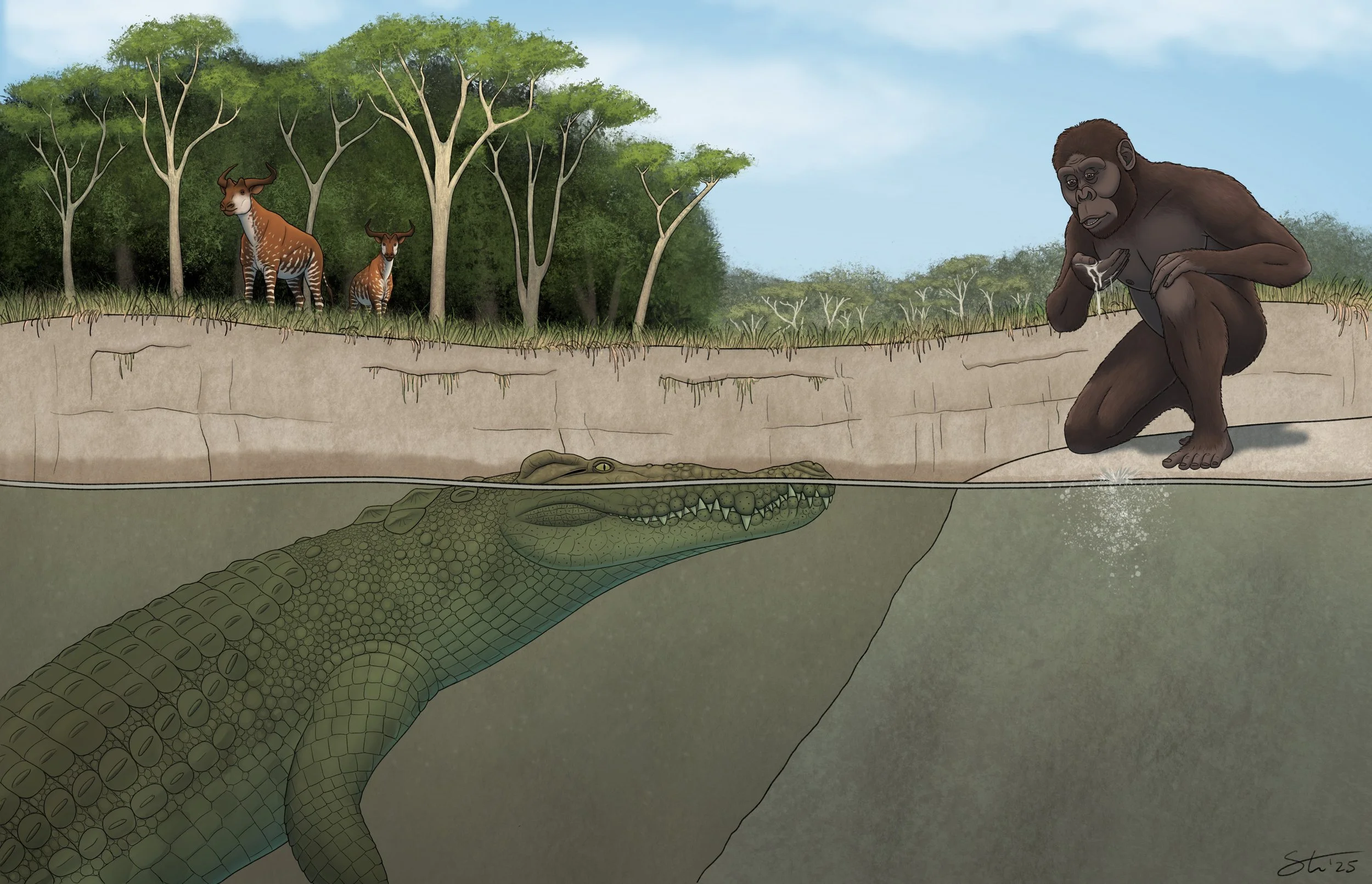
Sharks comparable to today's great whites evolved earlier than expected, revealing the repeated evolution of giant predatory sharks.How many australopithecines were eaten by crocodiles? The world may never know. Credit: Tyler Stone/University of Iowa
A new fossil croc from Ethiopia gives form to what early humans like “Lucy” had to watch out for at the water’s edge.
Read More